
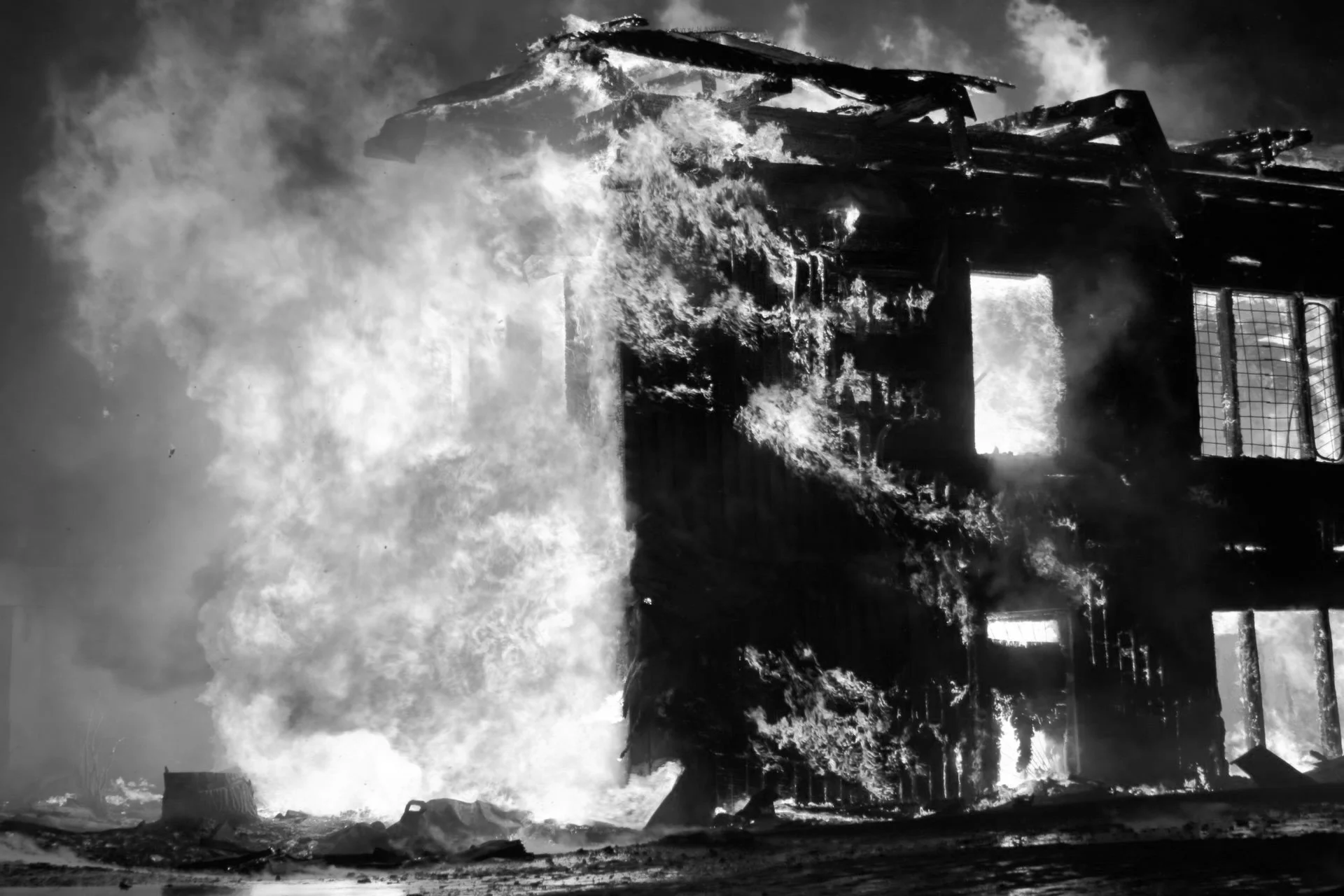
A recent LinkedIn post incorrectly attributed a quote to Werner Herzog, but the quote was thought provoking nonetheless. The statement was:
“The turnaround is the most honest situation in private equity. The building is burning. Everyone can see the flames. There is a strange dignity in this. No pretense. No fantasy. The [person] who walks in knows exactly what [they are facing]. The growth story is a collective hallucination. A room full of intelligent people agreeing on a future that does not exist and calling this agreement a strategy.”
In my last post, I described necessity as the mother of optimism, and how even in the face of overwhelming odds entrepreneurs continue to be optimistic and persevere. What struck me about this quote was the difference between a known turnaround and an unknown startup. My first CEO position was a restart. The company had burned through a lot of high-profile capital and never produced a commercial offering. The tech was promising, and they managed to attract fresh capital to make a go of it, but they needed new leadership. I was hungry for a CEO position, and frankly did not understand the challenges of a restart versus any other type of venture. In the context of the quote, the building was burning, but I was blinded by the opportunity to be a CEO and naively did not see the flames. Surprisingly, the existing long-term investors knew the situation, but the fresh capital was just as blind as I was. We were the ‘intelligent’ people hallucinating and optimistically ‘agreeing on a future that did not exist.’
Eventually you cannot ignore the flames in a burning building, and we came to understand that we were dealing with a very different situation than we anticipated. As the quote says, this is when that strange form of dignity kicked in. The pretense was gone, the fantasy was over, and we could honestly get down to triage and a fact-based tactical plan that might lead to a moment when we would have the luxury of defining a strategy for future success. I often think about it as the Apollo 13 moment when you take inventory of what you have and try to creatively make something out of it that will enable you to survive. The two most important assets at this moment are cash and people. There is a saying in the entrepreneurial community that given a choice between cash, product, and talent, an entrepreneur should pick talent. With the right people, you can create the right product and you will attract the cash. Unfortunately, great talent is scarce and in demand. Great talent can choose where to go, and a burning dumpster-fire of a business is generally not the most attractive choice. Even when you find the talent that recognizes the situation and shares the ‘dignity’ and enthusiasm to turn things around, they generally still want to be paid, so I have found that cash is king.
One of the CEO’s greatest challenges in a turnaround is building an appropriate culture. It is relatively easy to build an enthusiastic positive culture in a growing company where the future appears so bright that everyone has to wear shades. Surprisingly, in businesses living the growth story, employees often do not have a fulsome appreciation of the fragility of the company. They are often not attuned to whether the company is cash flow positive or profitable, so they are not aware that there may be a runway of available cash. At one of the companies I joined, during my first all-hands meeting I made a comment about our operating losses, thinking it was obvious we were not profitable. It was a revelation to most of the audience. Their bubble burst and reality came crashing in. It was not the company they thought they were working for, and for some it became a real problem. In a restart/turnaround there is no pretense or fantasy, and everyone knows exactly what the situation is.
Culture building in a restart or turnaround is a very different challenge. It is more of a Ted Lasso situation where the CEO has to rally everyone to ‘believe.’ We are in it together, and all pretense about titles and job descriptions fade away. We celebrate victories and incremental positive steps, and expect that not everything will go our way. The CEO has to exude confidence that inspires the troops to follow them, but radical candor is an important ingredient to build trust in a turnaround culture. You cannot speak to the team like a politician trying to shine a positive light or spin on everything. You have to calmly acknowledge the good and the bad and be honest with the team while helping them to understand reality. In a turnaround, employees watch management like hawks. Every nuance of behavior is scrutinized. If an executive is grumpy or down, the rumor mill reads disaster. It is vital to deescalate rumors as fast as possible. An open environment where anyone can ask any question can eliminate the opportunity for rumors to spread. Employees are very smart, and they generally know what is going on long before management tells them. Answering difficult questions honestly is the only way to hold the team together. They want to know that you know that they know, and they want the respect that comes from dealing with them honestly.
Another element of a turnaround is how the board operates. The expectations of the board are very different in a turnaround situation. In a growth environment, the board expects aggressive plans and outstanding execution and performance. In a turnaround, the board knows the building is burning and behaviors change dramatically. In my experience there are two paths institutional investor board members follow. One path is estrangement, and the other is engagement. Institutional investors have a portfolio of investments and limited time. They need to decide where to spend their time that will have the most positive outcome for their portfolio. For some, once a company becomes a turnaround situation, their calculus tells them to spend their time elsewhere. This estrangement path leaves the CEO and executive team to ‘do their best,’ without a lot of oversight and guidance from the estranged directors. Typically, they still want board communications and meetings, but estranged directors rarely comment of show up. They are nominally still involved, but their actions speak loudly.
The alternative path is engagement. When an investor board member believes that they can help and they are willing to invest their time, they engage with the CEO and execs. In the most positive situations, it is as if the board members come down off their pedestals and join the team. This can be a highly productive path for a turnaround because board members have resources and connections and wisdom that can be very helpful to the executive team. Board members shift from sitting in judgement of performance to actually becoming engaged to help make performance occur.
I have often said that no company hires a new CEO unless they really need one. There are many positive reasons to hire a new CEO, but often the need is being driven by a loss of confidence in the existing CEO based on the business’s failure to execute. For a candidate, it is important to understand the drivers behind a board seeking a new CEO, and in particular to differentiate between positive factors and negative factors driving the decision. If the hire is driven by a failure to execute, then the board and the candidates should be on high alert to anticipate a burning building turnaround, and if there are flames on the horizon, then pretense and fantasy need to fade away so the right person is hired and everyone has the same expectations.